
Fillmore County Multi-Day Arrest Log
The county publishes no official 72-hour, weekly, or rolling arrest blotter. Start with the official current inmate roster. It shows only who is in custody right now. A roster row disappears once a person is released or moved to another facility. History is not its job. For several days of context, pair that roster with the Minnesota court calendar. Add the Fillmore County Journal Police Reports category. The Journal runs dated reports, often weekly. Its stories can follow a case past the arrest into fines, fees, and sentences. Treat it as an editorial pick of newsworthy events rather than a complete feed of everyone arrested.
| Source | Window | What it establishes |
|---|---|---|
| County roster | Current snapshot, updated daily | Apparent custody in Fillmore County jail |
| Court calendar / MCRO | Hearings and case continuation | Public court events and later disposition, subject to access limits |
| County Journal | Dated, often weekly posts | Selective news and court context, not custody |
Read Fillmore Arrest Reports Carefully
Start official, even for a weekly sweep. Note the roster's timestamp. Record the intake date if the arrest entry shows one. Keep the booking number and the court case number distinct, because they serve different systems. Then move to the court calendar or MCRO. Newspaper items come last. A story might describe the arrest, a later hearing, or a finished sentence, and it will not tell you whether the person is still in custody.
- Check the Fillmore County roster for current local custody.
- Use MCRO Hearing Search with a date, county, case number, or exact name.
- Review dated Journal Police Reports for local context.
- Request older county material through Sheriff Services.
- Confirm an unclear holding location with the jail or arresting agency.
One catch with MCRO: pending charges often stay invisible. Traffic and petty-misdemeanor matters without a conviction may not surface in a defendant-name search at all. Try a case or citation number instead, or contact Court Administration.
Fillmore Arrest Entry Differences
Each roster entry shows the photo, MNI, name, sex, age, and booking number. You also get the intake date, charge details, and bail or bond figures. What it lacks matters too. There is no arresting agency, arrest location, release date, court date, or final disposition. The photo appears only when the county has one. Journal Police Reports run wider. A story can name the agency, the person, and the date. It may add an alleged offense or traffic detail, a fine, total fees, a sentence, or other court action. That is a later stage of the record, not the booking itself. Scene or editorial photos are not mugshots unless labeled that way. The Journal carries no dependable booking-photo field.
- Booking
- The jail intake process and its initial record.
- Disposition
- The court's resolution, which may differ from the booked charge.
- Transfer
- Movement to another facility, which can remove a roster row.
- Archive
- Older retained material, not the current online table.
Weekend Fillmore Arrest Timing
No official weekend, holiday, or catch-up posting schedule was published. The county states only that its roster is updated daily. One generated timestamp cannot prove a stable lag measured in minutes or hours. Weekend events may reach the court calendar on a different rhythm from jail intake or news publication.
The Jail FAQ says post-arrest court timing depends on the court schedule and refers to Minnesota's 36-hour and 48-hour review rules, which use different calculations. That is not a promise that a roster or story appears within either period. Ask the court or an attorney about a case-specific deadline.
Older Fillmore Arrest Records
The roster states no retention period. For an older Fillmore County booking, send the Sheriff a data request. Include the name, approximate date, booking number, arresting agency, and the exact record you want. Ask whether the record stayed local or transferred elsewhere. Ask also whether it was corrected, sealed, or disposed of under the current schedule. The Minnesota Historical Society's Government Records page links the general schedules that govern county law-enforcement records. One older schedule describes jail registers and activity logs as potentially permanent. That says nothing certain about Fillmore County's practice today. The State Archives government-records page shows the historical path.
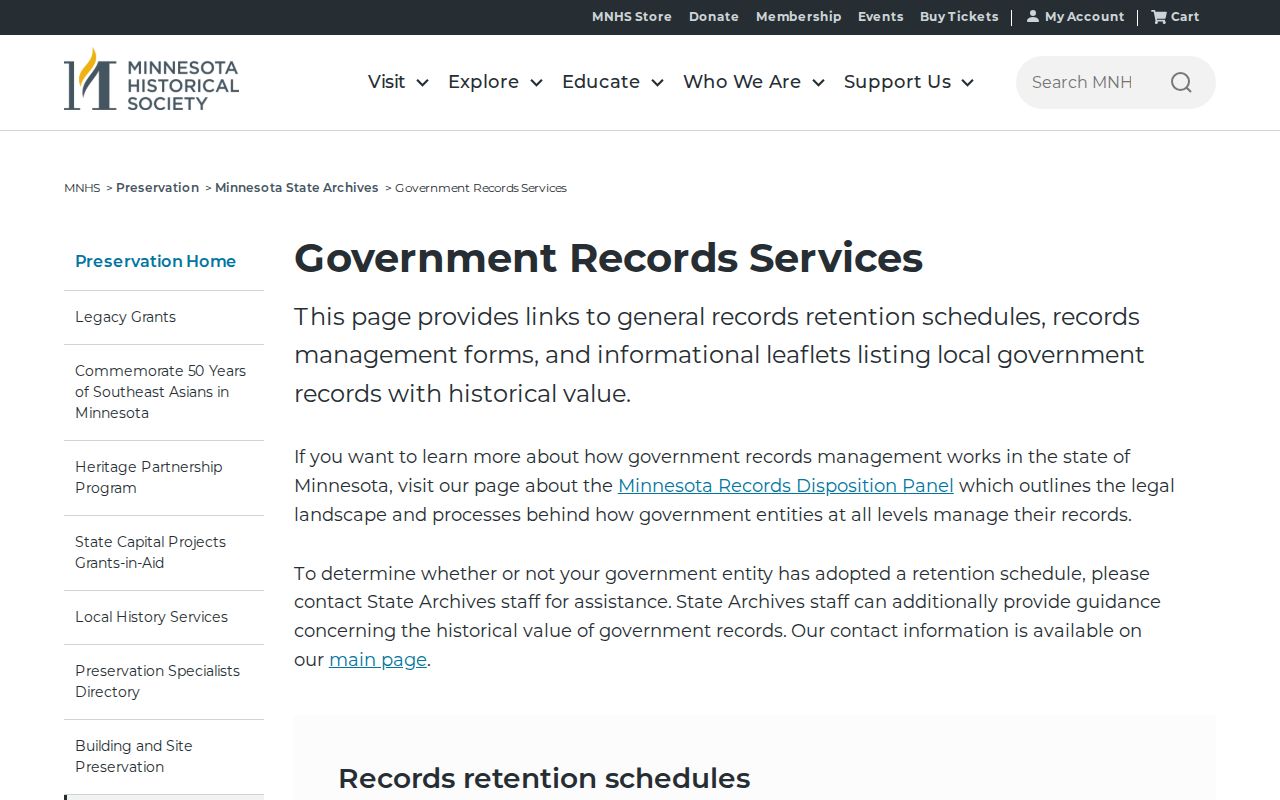
This route maps the schedules. It cannot confirm that any specific Fillmore booking sits in the archive.
Fillmore Police Reports by Week
The Fillmore County Journal is the closest thing the area has to a blotter. Its category pages are organized by date, with reports landing roughly weekly. Coverage mixes Sheriff's Office activity with other agencies. Spring Valley, Rushford, Preston, and neighboring communities all appear. No city-specific newspaper mugshot feed exists. The Fillmore County Journal archive illustrates that dated pattern.

Those dates make the Journal a useful selective archive. It is not an official or complete arrest log for the county. Regional outlets will sometimes carry a Fillmore arrest or investigation. None runs a continuous booking feed. An unofficial page at RecentlyBooked also lists recent entries. It can lag, duplicate a record, or keep an image up after release. Official sources should always lead.
Arrests Booked Outside Fillmore
Local reporting documented a stretch during the jail project. In that stretch, someone arrested in Fillmore County was booked into Winona County Jail. That history is a good reminder. Where an arrest happened says nothing about where the person is held. A Fillmore arrest does not guarantee a roster row. The local report about an out-of-county booking illustrates the exception.

Missing from the local roster? The arrest may have happened somewhere else. Always note two facts. Who made the arrest, and where the person was booked. Someone sentenced to state prison moves into the Minnesota Department of Corrections system. Federal custody and immigration custody each require their own separate locators. For today's bookings only, the 24 Hour Arrests page answers that narrower question directly.
A multi-day search works better with a short source log. Jot down where each fact came from. Note whether the entry described booking, custody, a hearing, or a final court result. Compare spellings and identifiers before linking two entries together. A matching name alone is weak evidence. That is especially true when a news item leaves out the age or booking number.
The Fillmore District Court calendar shows public court activity and shifts as hearings move. Some confidential and access-restricted matters never appear there. MCRO also treats its online records as unofficial and blocks name access to certain pending cases. So a blank calendar or empty name result does not mean no arrest or case exists. Court Administration at 507-765-6021 can walk you through public-access options without giving legal advice.
Older records need a different distinction. A jail register may list commitment, admission, discharge, offense, sentence, and discharge type. A modern roster row instead serves day-to-day jail operations. Ask for the record series, date range, and agency instead of requesting an open-ended arrest log. The Sheriff may say an old series moved. The State Archives collection and Records Disposition Panel pages explain access and schedule review. Neither one carries a current Fillmore jail roster.
City boundaries add a final wrinkle. Rushford and Preston run their own police departments. Fillmore County provides contracted law enforcement for Spring Valley. An arrest report can therefore start with a city agency. The detention record can still sit with the county jail. Ask both questions every time. That pair of answers tells you where the next call goes. It might be city police, the Sheriff's records unit, the jail, or the court.