
Fillmore County VINELink Coverage
Minnesota VINE is free and anonymous. Sign up through VINELink or call 877-664-8463, also written 877-MN-4-VINE. The Fillmore County Jail FAQ confirms the jail uses the service. Victims can register at any time. Telephone alerts then cover release, transfer, or escape. The scope is current county-jail custody. Nothing more. VINE does not publish every arrest, hold a court disposition, or guarantee a booking photo, and a fresh arrest may not appear while intake data is processed. Someone moved beyond the county-jail system can drop from view as well.
| Custody situation | Correct source |
|---|---|
| Current Fillmore jail custody | Minnesota VINE and county roster |
| Minnesota prison or DOC supervision | MN DOC and Minnesota Haven |
| Federal prison | BOP locator |
| Immigration detention | ICE locator |
| Charge outcome | Minnesota courts |
Search Fillmore Custody on VINELink
Start at the VINELink search route and pick Minnesota. Choose Fillmore County or the Fillmore County Adult Detention Center if that option appears. Controls shift as the application updates, and common or partial names can return more than one person, so match results with care.
- Select Minnesota.
- Choose Fillmore County or the local detention facility when offered.
- Enter a name or identification number; partial-name search may be available.
- Compare facility, ID, and custody status before opening a record.
- Use the notification control on the correct record.
The VINELink state and county search interface appears in this capture.
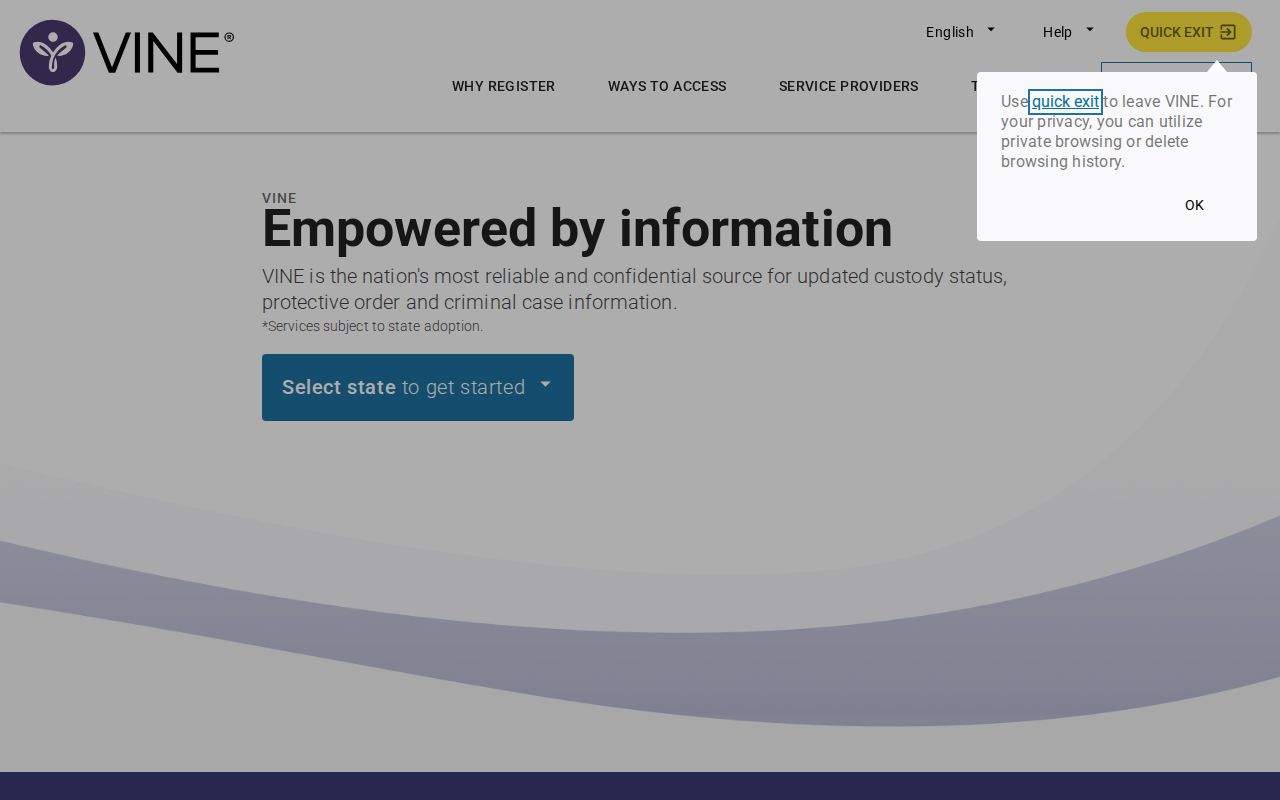
Set the state and local scope before trusting any result as a Fillmore match. No match? Check the spelling and retry with a partial name. Then compare the official Fillmore roster. Call 507-765-3874 if intake, a recent release, or a transfer may explain the gap.
VINELink Results After an Arrest
Searches can return current custody status, housing facility, a booking or facility ID, and scheduled release information when available, according to the Minnesota fact sheet. Treat a blank release field with caution. It is not a promise. A listed release date can shift because of a court order, transfer, sentence calculation, or facility update.
- Custody status
- The person's reported state in the jail system.
- Housing facility
- The location feeding the record.
- Facility ID
- A matching identifier, not a court case number.
- Scheduled release
- Information shown only when available and subject to change.
VINELink does not replace a Fillmore booking record. The county roster may add intake date, charges, bail or bond, and a photo when available. Hearings and disposition belong to the court record. Keeping the three sources straight prevents confusion about what a custody alert actually says.
Register for Minnesota VINE Alerts
Alerts can arrive by phone, email, text, or in-app notice. Mix channels if you like. The fact sheet says an account is optional and registration needs no name. A PIN governs phone and website changes or cancellation. Store it securely.
- Open the correctly matched custody record.
- Select available notification methods.
- Enter the destination phone, email, or app setting.
- Create and retain the management PIN.
- Follow confirmation prompts and keep facility contact details as backup.
The VINELink registration entry illustrates the notification route.
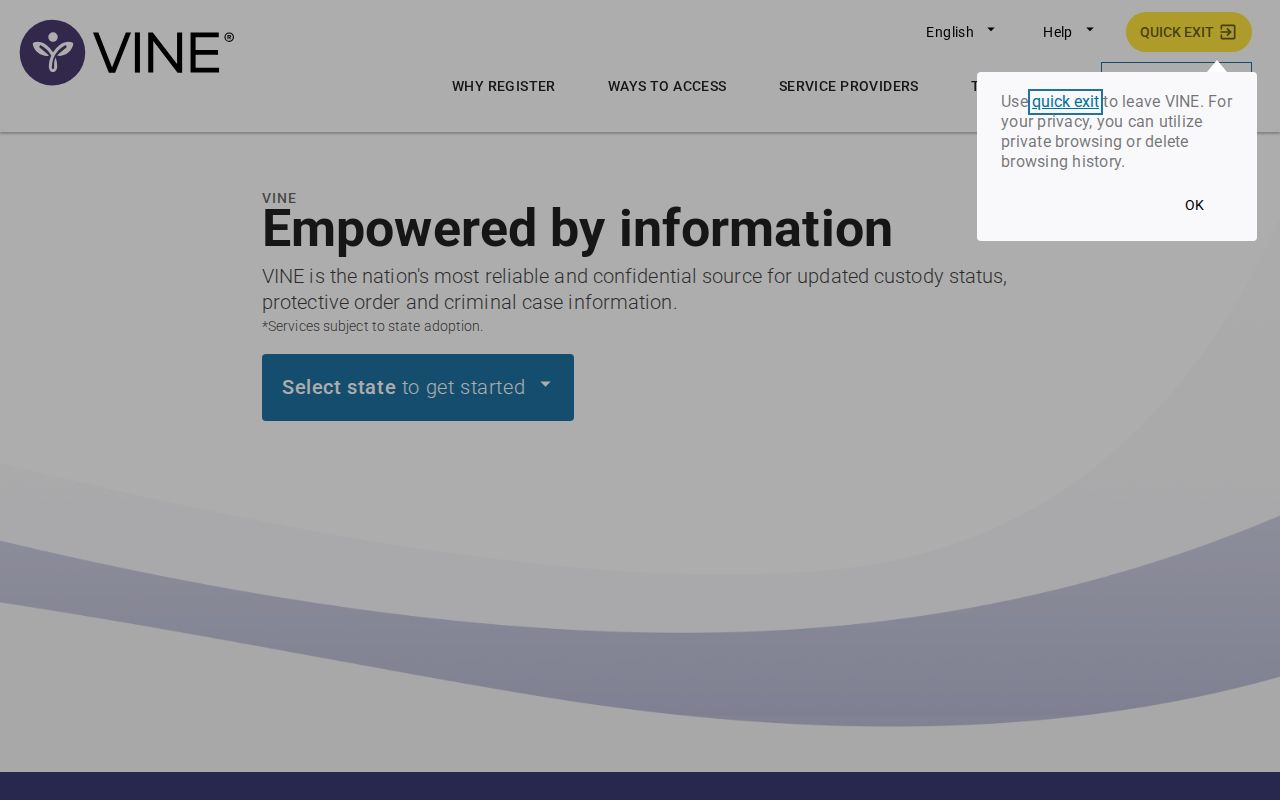
The controls only attach an alert preference. They do not create an official booking or court record.
Confirm Fillmore VINELink Alerts
Statewide guidance says county-jail data refreshes every 15 or 30 minutes. That is a Minnesota figure, not a Fillmore promise. Facility processing can still cause lag. So can transmission or a transfer. The Fillmore FAQ itself warns users not to rely on VINE alone. For urgent questions, call the Fillmore County Adult Detention Center at 507-765-3874. The address is 901 Houston Street NW, Preston, MN 55965. Office hours differ from round-the-clock jail operations. Custody status can change at any hour.
The official Minnesota VINE page explains state and county scope.
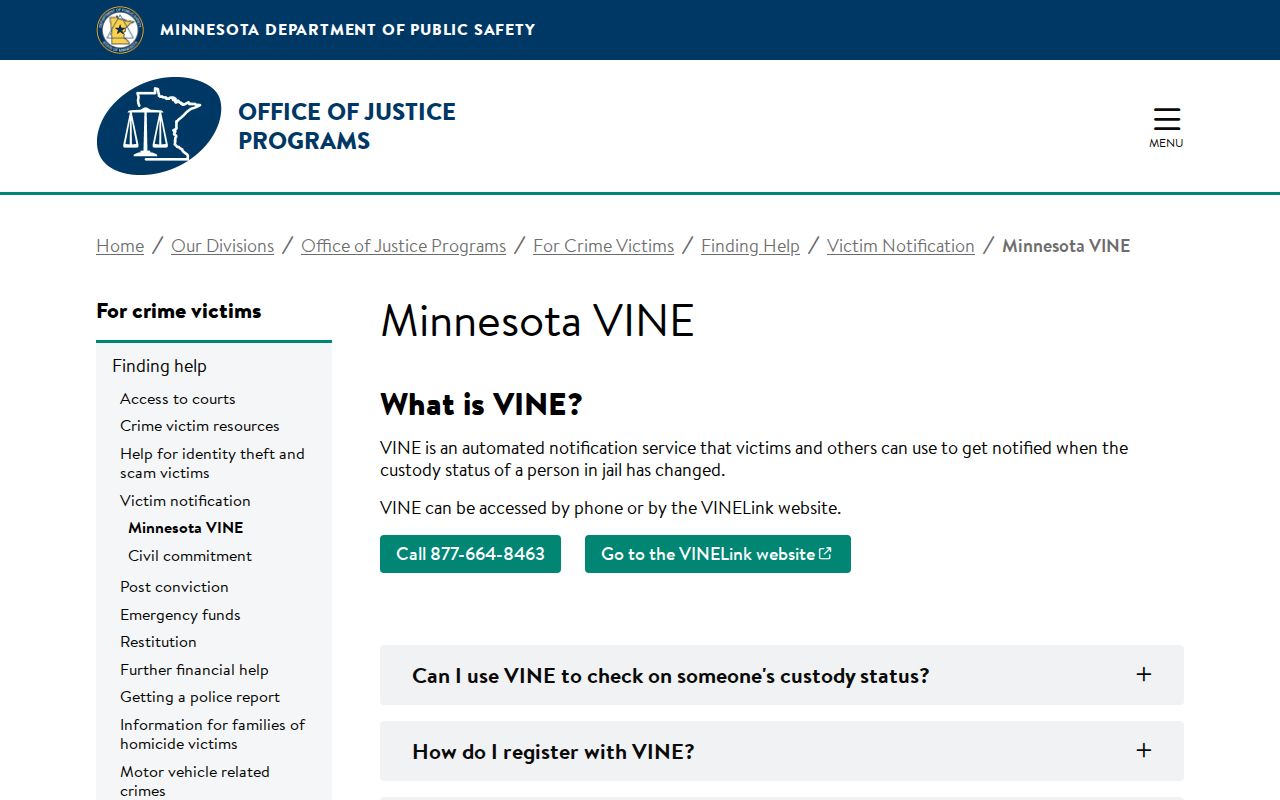
The state page confirms VINE's county-jail role and provides the statewide contact route.
VINE and MN DOC Differ
Minnesota VINE connects county jails. It does not reach state prisons run by the Minnesota Department of Corrections. Once a state sentence places someone in prison, switch to the MN DOC search and victim-assistance information. Minnesota Haven is the DOC-oriented notification path. It is neither VINELink nor a fresh county booking feed. Federal custody sits outside the system too. BOP and ICE holds do not trigger VINE alerts. A local record can end while the person stays confined elsewhere, so confirm the destination before switching locators. The Fillmore Sheriff's office lists no booking app and no continuous booking feed on social media. Everbridge handles emergency and IPAWS alerts. It sends no release notices. The statewide VINE app is not a Fillmore Sheriff product. Keep each tool in its lane.
Respond to a VINE Notification
A release, transfer, or escape message is a system notice tied to facility data. Save the time and wording. Then confirm status through VINELink and the detention center. Never assume "transfer" means release. It may signal a move to another jail or correctional system, where the next lookup and alert service differs. Phone notifications use the registration PIN. Email, text, and app alerts follow the contact route entered at signup. Keep contact details current and check the device's blocking, spam, and notification settings. A missed call can sink an alert. So can a filtered message, dead battery, or changed number, even when the system sends it.
- Keep the Fillmore detention center number with the alert record.
- Confirm the person's full name and facility identifier.
- Ask which agency or facility received a transfer.
- Use emergency services for an immediate threat.
- Update or cancel registration with the saved PIN when circumstances change.
Fillmore Roster Versus VINELink
The two county-jail sources overlap but answer different questions. The Fillmore roster is a daily public snapshot with booking fields. VINELink centers on one person. It exists for custody status and alerts. Checking both helps after a fresh arrest, though neither serves as a full arrest archive.
| Question | Roster | VINELink |
|---|---|---|
| Who appears in local custody now? | Shows a current jail table | Searches for one matching person |
| What booking fields appear? | May show intake, charges, bond, and photo | Focuses on status, facility, ID, and release data if available |
| Can it send notice? | No alert feature documented | Phone, email, text, and app options |
| Is it historical? | No published archive | Not a complete arrest-history index |
Start with timing and custody location whenever the two sources disagree. Jot down both timestamps. Then call the jail directly. Ask whether the person is still being processed or released. Ask if they have moved to another facility. A Fillmore County arrest record that has rolled off the roster goes through the Sheriff's data-request form. Hearings and final results belong to Fillmore District Court and MCRO.
Use VINELink With Care
No account is needed to use VINELink, and the state material describes anonymous registration. Still, think about where alerts land. A shared phone, a family email account, or a lock screen can expose sensitive news to the wrong eyes. Choose the channel accordingly. Guard the PIN. Never enter another person's contact details without their knowledge.
A search result works best for confirming custody, preparing for a possible release, or coordinating lawful court and family needs. It is not proof of wrongdoing. Results can change. Names get confused too. Confirm identity through several fields and check with the originating facility before trusting a match.
Fillmore County's jail FAQ still matters locally. It confirms VINE use and warns against leaning on one source alone. The county roster adds another official snapshot. Paired with a direct call to the jail, those tools build a stronger confirmation chain than any unofficial directory or social-media claim. One wrinkle remains: a released person may drop off the current roster while an older Fillmore County booking record still exists. VINELink is not an archive for that. Request the county-held record through Sheriff Services, then follow the case through the Minnesota Judicial Branch.